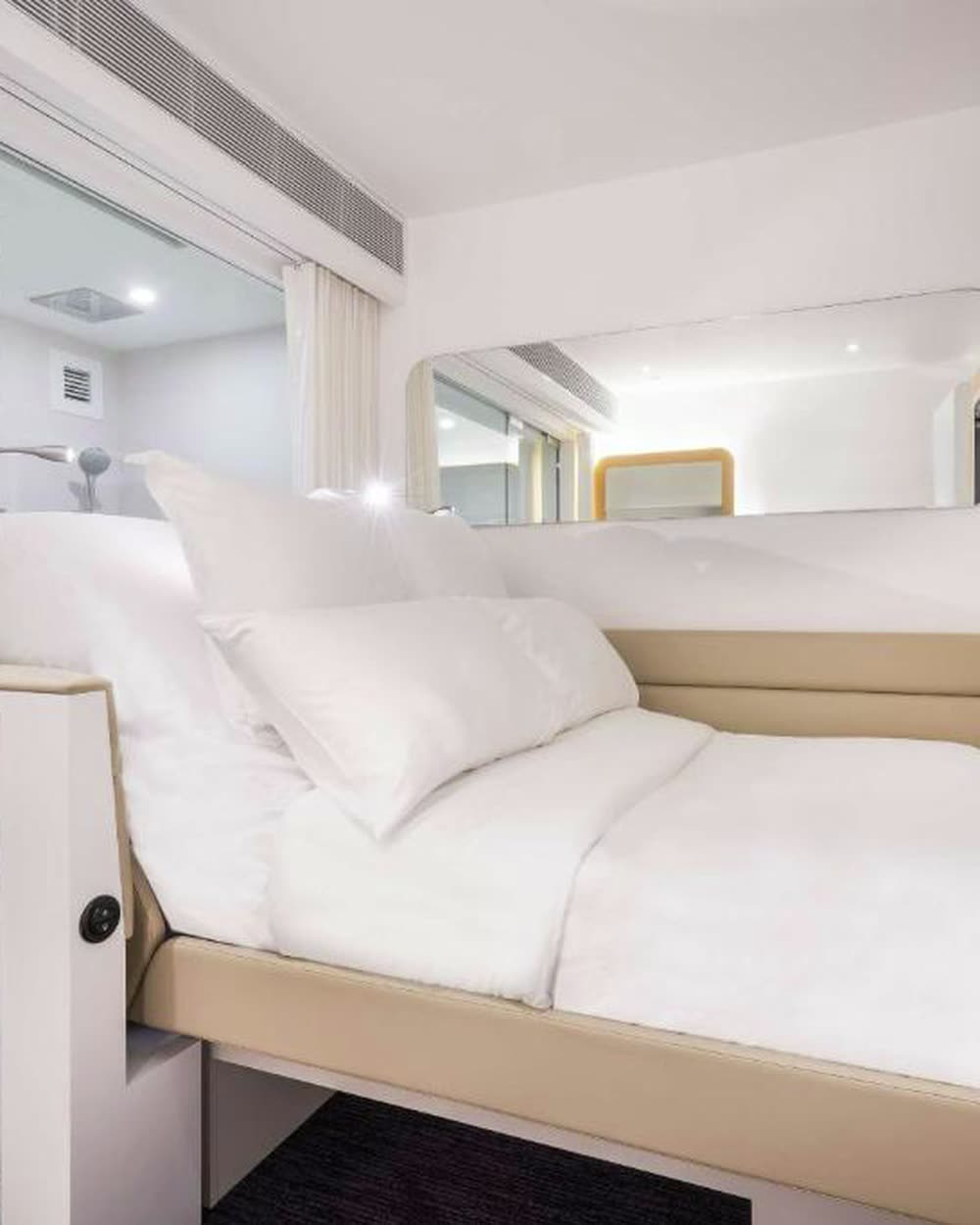
Four hotels where the sleeping space is a fitted cell rather than a room. Three of the four give you no exterior wall at all, which is a planning decision and not an oversight. Small rooms in ordinary hotels are not included; the cell has to be a made object, repeated, with its own front face.
07
Tokyo, Japan
Book and Bed Tokyo
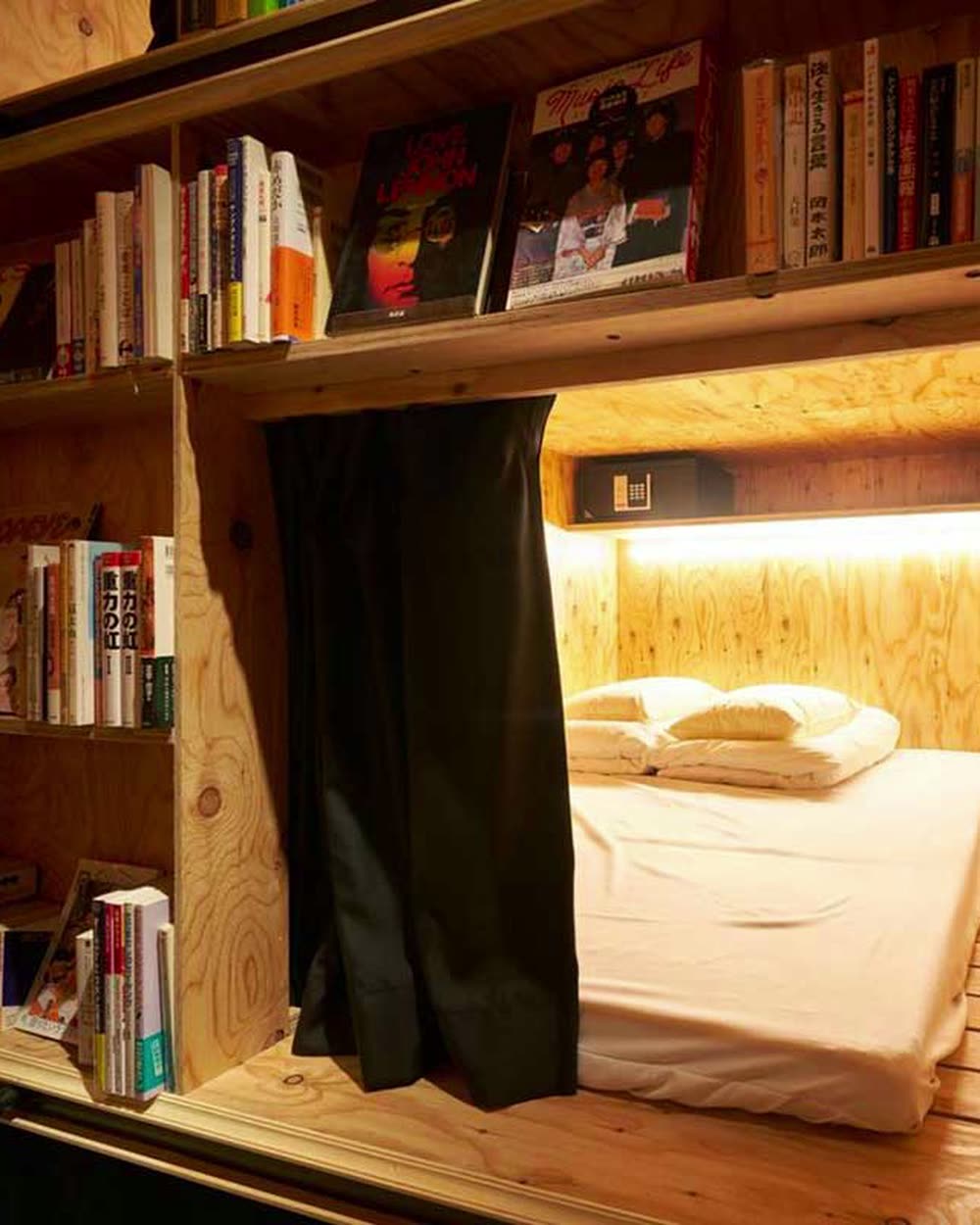
Sleeping berths built into the shelving, so the wall beside your pillow is a row of books
What you face
Your berth is a slot in the joinery, entered from the front and closed with a curtain. Turn on your side and the nearest surface is the back of a bookshelf, spines and all. A reading light is set into the timber. The shared floor stays lit and quiet outside the opening.
Why it is like that
The plan puts storage and sleeping into one piece of furniture, which is how a small upper floor holds both a library and beds. Timber cells brace one another and need no separate partitions. A curtain instead of a door keeps each berth ventilated and the escape route clear.
Worth knowing Bathrooms are shared and along the corridor, so a small bag is easier here.
Sources read · October 2026
08
Tokyo, Japan
Nadeshiko Hotel Shibuya
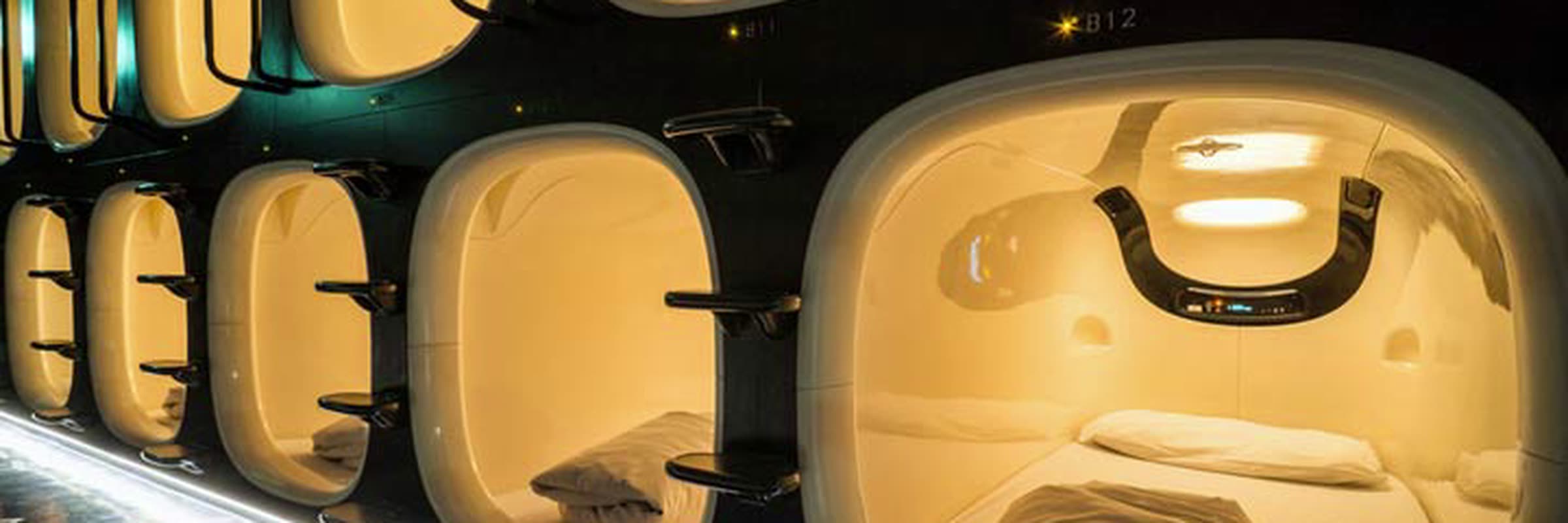
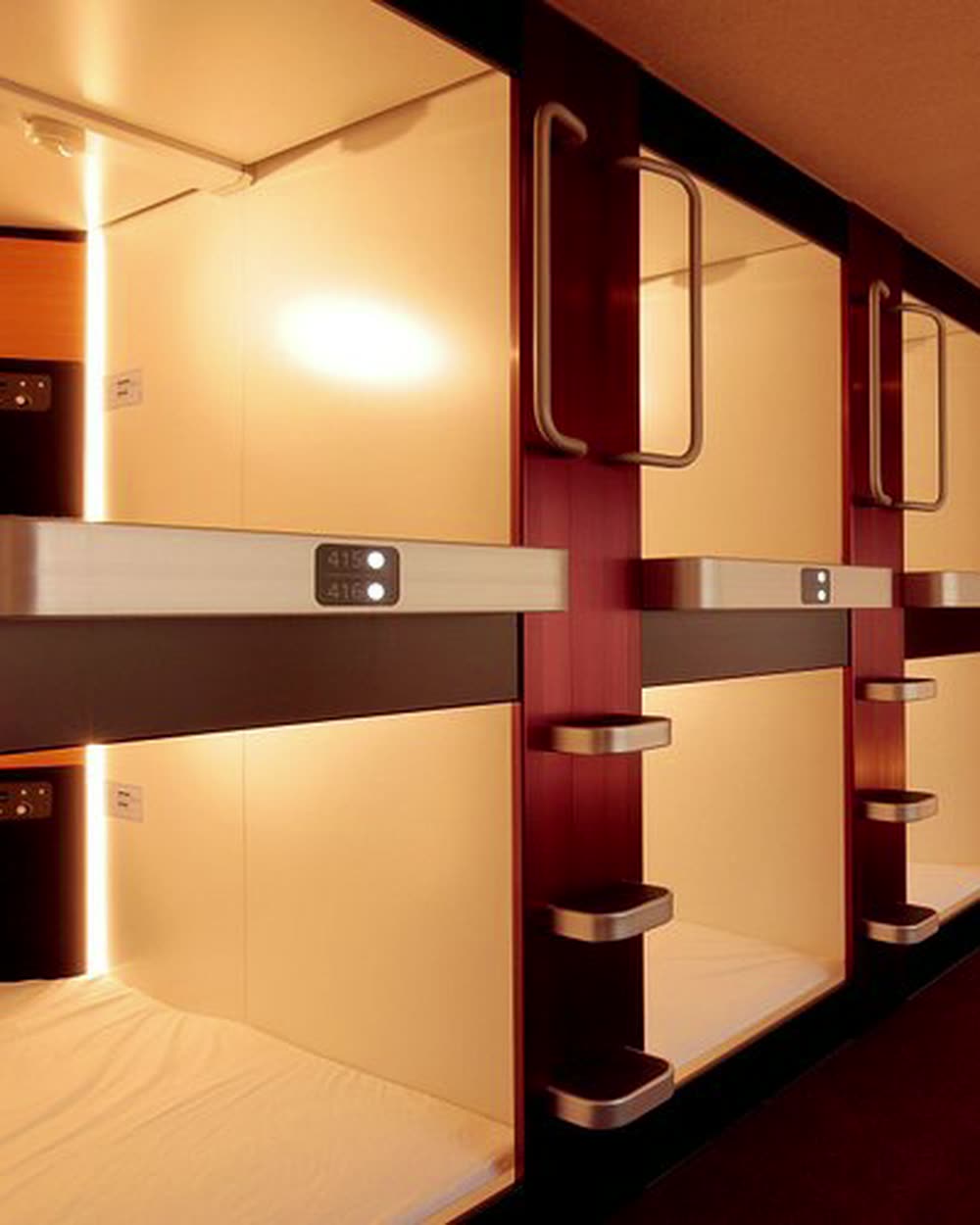
A women-only capsule house in Shibuya where the openings are finished like cabinetry rather than tubes
What you face
Each capsule opens as a framed rectangle in a wall of stacked units, closed off with a blind. Inside, the ceiling sits close above you and the far end is a flat panel, not a window. Lighting is low and warm. Corridor sound is muffled by the depth of the shell.
Why it is like that
Capsules stack two high because the floor height allows exactly that, and each unit is a prefabricated shell dropped into a frame. Keeping the opening to one face leaves the shell stiff and quick to clean. A women-only floor plan also puts changing and bathing rooms on a single route.
Worth knowing Check-in is women-only, and luggage goes to lockers rather than into the capsule.
Sources read · October 2026
09
KLIA2, Sepang, Malaysia
Capsule Transit
Capsules inside a working airport terminal, where the corridor outside never fully goes dark
What you face
The capsule faces a solid interior wall of the terminal. There is no outside view at all, and the only light you control is the strip above the mattress. Announcements reach you softened through the shell. The time of day stops being visible, which is the purpose of the room.
Why it is like that
The unit occupies a leased floor of the terminal building, well away from any facade. Airport structure and services take the perimeter, so guest cells sit inboard where the plan is deep. Closing them completely lets travellers sleep across a night flight and a daytime layover alike.
Worth knowing Confirm whether your capsule sits before or after immigration when you book.
Sources read · October 2026
10
Singapore
YOTELAIR Singapore Changi
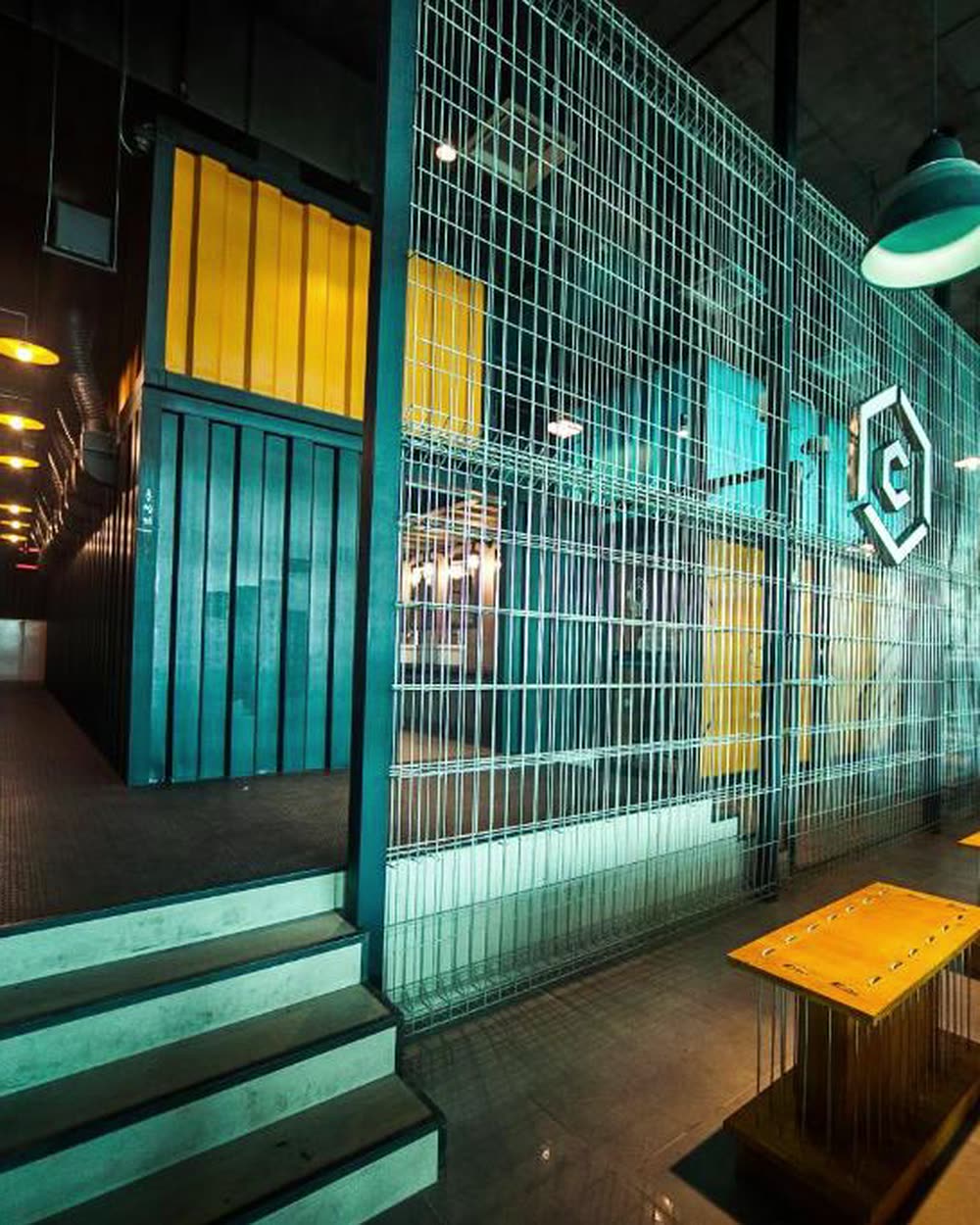
Compact cabins in the Changi transit area, arranged along internal corridors with no exterior wall
What you face
A cabin here is one fitted room with the bed against the long wall and a panel where a window would otherwise sit. Everything is within reach without standing up. Lighting moves from bright to dim by switch. The corridor beyond the door carries the low background noise of the terminal.
Why it is like that
Transit accommodation has to sit inside the secure zone, which is a deep interior floor of the terminal. With no facade available, cabins are planned around a lit corridor and rely on mechanical ventilation. Fitting the furniture as one unit keeps the footprint small enough to repeat many times.
Worth knowing Stays are booked by block of hours, so check which terminal your airline uses.
Sources read · October 2026
What a room faces is a fact about the plan, not a verdict on the hotel; a wall in front of you is a decision, the same as a window. Everything written here is our own wording of published material, and the month at the foot of an entry marks when we last read that material.